Interview with Anastasia Netri About Vulnerability and Honesty in Marketing

 Interview with Anastasia Netri About Vulnerability and Honesty in Marketing

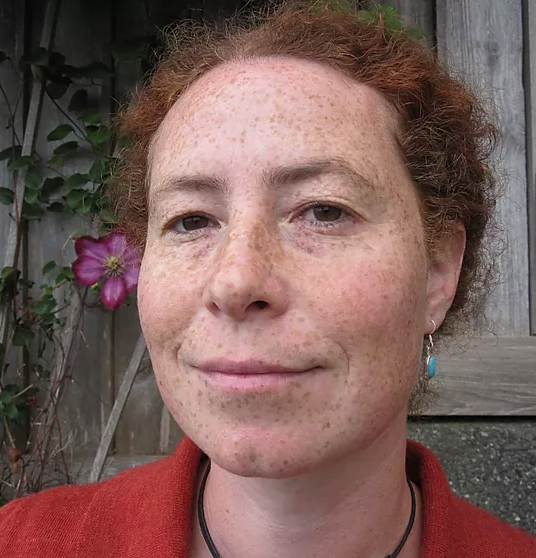
Anastasia Netri (pictured right) recently asked me to be a part of her ‘Experts in the Raw: The Naked Truth About Success‘ telesummit. Her idea was to give people a very candid look at the truth of what it takes to grow a business in the real world, beyond the marketing hype of how easy it is. I loved the idea. And I loved her even more when she told me all the speakers needed to send her an ‘almost nude’ photo. You can see the photo I went with here.

So, I decided to interview her for my blog so you could get a taste of what this program is all about and who she is and how you can build deeper trust by weaving in more authenticity and vulnerability into your business.

You speak a lot about needing to be real about how hard it is when you first start out. We’re often told: “You can make $10,000 a month in 2 days a week even if you’re just starting out!” or “Get to 6 figures in your first 3 months of business!” or “A million dollar business is easy!” And then, after trying really hard we’re left wondering, “What’s WRONG with me that I can’t do that?” Can you share what it was like for you when you started out?

Well, I felt like everyone does, which is “if they knew how fu*ked up I was, no one would hire me.”

It was when I first started running group programs that I found myself sharing personal stuff, mistakes I made last week, and I found that people were feeling closer to me, trusting me more, and getting more empowered from feeling like they didn’t have to be perfect all the time.

So I kept doing it, and then started to share stuff more publicly in baby steps. I still get nervous about it, but I decided the best way to keep going with this was to invite a bunch of people to hang it out of the wind with me. And here we are.

This program you’re doing feels a lot like the Emperors New clothes. there’s an exposing, unveiling and truth telling energy to this. Why is this so important to you?

I spent so much of my own life “comparing” to everyone else. I thought people who had achieved success had it all together, and I always felt like I could never measure up. I think the spiral of negative self talk was the biggest thing in my way.

I know I’m not the only one that feels like that. I thought if I could show people that they are just the same as the people that they *think* have it all together, that we make mistakes, still have wounds and stuff, and can still “make it” then they can too.

What’s the response been so far? Is it hitting a nerve like you thought it would? Are people getting it?

People are not only “getting it” but they’re loving it. It seems to be speaking to those people that really WANT a peek behind the curtain. We’ve already built a community of nearly 4,000 amazing entrepreneurs, and it’s growing from there. Very cool.

One of the lessons I’m reminded of from this is the power of helping people remember that they’re not alone and they’re not crazy for having their experience. It’s painful to be trying to grow a business and feel like everyone is ahead of you and you should be further because some guru said so – when, in reality, you may be doing great but have a skewed set of expectations based on someone’s hype and marketing. Can you say anything more about this?

I agree totally. Expectations is everything. There is a lot of belief out there that we are all “falling behind” and it’s not true. The truth is – in ANY business, it takes 3-5 years to really turn a profit.

I really sum it up like this (I wrote this to a FB group of clients):

You see, it takes 3 years MINIMUM to really turn a profit in your business. In year 1 – EVERYTHING IS NEW. You can feel like a novice, no one knows you, you’re scared, you have to do 5 tele seminars until you get it right…all of that. You’re really a bad ass if you have a nice practice, and can pay some bills with the money you generated from your business.

Then, in year 2, you start to know a little more. You’re starting to figure this out. But, you reinvest all of your money. You hire your expensive coach, you get your nice pictures up. You upgrade your branding. And more.

Then, you go into year 3. Now, shit is starting to work. You’re getting the hang of this. You know some people. You have some attention. You have mastered sales conversations and now you can sell your bad ass $10,000 package (or more).

Year 4 comes. You got a profit. You’re a player in the industry. You’ve got a big ol’ list. And it just grows from there.

There are exceptions to the rule, of course, but this is how it is for 90% of entrepreneurs – not just coaches, but ANYONE.

SO KEEP GOING. TAKE CONSISTENT ACTION. Don’t give up. It DOES get easier.

If people knew this, perhaps they wouldn’t think they are FAILING. A quantum leap doesn’t necessarily mean 6 figures. It means that you’re still going, making leaps, and not giving up.

Here’s an example:

If you want to be a speaker, chances are…you may suck for your first few talks. However, if you want it enough and you’re driven to keep going, you ask questions, get some training, and practice – then lo and behold – you’re going to be an awesome speaker. It’s that simple. 

Making money as an entrepreneur requires some skills. There’s marketing. Sales conversations. Technology. Relationship building. The list goes on and on. Growing a business will pull you out of your comfort zone in 25 different directions at once. But – when you take one step at a time, breathe, ask questions, get help, and just DO IT…at some point you will achieve mastery. (And, then you’ll be on to the next new and exciting thing!)

Being an entrepreneur is a spiritual, mental, and emotional bootcamp. It will train you to be at your best, know who you are, and embrace the unknown more than just about anything you’ll ever do.

You can be one of the 10% if you simply decide right now that you aren’t giving up. That’s what every successful person you know has in common. There was no “plan b”. They just made it work. It’s not because they are smarter, prettier, richer, or more popular. It’s because they kept going. YOU can do that too. Let today be the day you decide.

You speak about the importance of being sort of selectively vulnerable and sharing mistakes you’ve made that are relevant to them. What’s your feeling about sharing things you are currently struggling with?

I think it’s the truth. It is HARD to share that stuff though, quite honestly. But I’m found that in a past program that I lead, and even with current clients, when I share screw ups from “last week”, and turn it into a teaching moment, people see the real deal – which is mistakes happen, and the bigger you’re going, sometimes the bigger the mistake.

BUT, as long as you learn from them, APPLY your learning, and move on – then that’s what will guarantee your success.

Many entrepreneurs wonder how much to share with their clients, and for good reason. If you’ve ever wondered how much of yourself to share, and how it affects your credibility, then this article will surely shed some light on this topic for you.

When it comes to being authentic in your marketing and communication with your clients, you don’t have to share everything. Sometimes, it’s not in service of them to do so. It doesn’t mean you’re holding back if you don’t want to be public with everything. Private lives are okay!

However, being a little edgy with your sharing can really help your clients to relate to you, to know that you understand them, and to feel even more connected with your message.

Here are a couple of tips that will help you decide what to share:

Tip #1: Share things your clients can learn from

It is of great service of your clients to share mistakes you made, what you learned from it, and what you can teach them as a result of it.

For instance, let’s say you teach about how to maintain balance, and last week you worked 90 hours, never left your house, and didn’t shower for 4 days. (It happens.)

A great article or talk could tell your clients something like:

“Look, balance is not always on an every day basis. Last week I was in the middle of a huge project and worked super hard, but I realized that one week of “full steam ahead” would provide me with 2 weeks of lightening up my schedule.

So I finished my project, scheduled an entire day unplugged, got a massage, and curled up with ‘50 shades of gray’ for a few hours. It was awesome, and I had accomplished a lot. I celebrated myself.

It’s important to remember the first and most important quality of balance is to not beat up on yourself, know that at times you’ll get busy, and make sure to plan some down time. Then, return to your balanced life the following week.”

You’re sharing with them that they don’t have to be perfect and give them permission to fall off the horse from time to time. You can then, lovingly encourage them to keep getting back on track.

Tip #2: Share things your clients can relate to

Let’s take the same scenario. You teach about balance. In your “story” you may not want to share about the crack problem you had in 1983. This has nothing to do with them, and what their issues are.

But you CAN share about how you worked 90 hours a week for a year, burned yourself out, had to learn the skills you now teach, and how it helped you.

Remember to keep your shares relevant, turn your “mistakes” into teaching moments, and be open to showing them that if you don’t do things perfectly all the time, they can still have an amazing life!

What do you do when you get personally attacked by someone on your list for being ‘out of integrity’? And, if it hasn’t happened to you, what would you recommend people doing?

I’ll tell ya – the bigger your list and your following the MORE that people will come at you. I’ve had people tell me that I suck before (or they don’t like this or that about me), and it’s hard to hear. However, there is always something useful in it. So instead of blaming them, I listen. I will find places to get more clear, set better expectations, and be a better coach. There’s always juice in that feedback, and it’s hard not to take it to heart. I think the key is not staying there, and to keep getting back up.

Truth and integrity, and what they mean, varies from person to person. So that kind of stuff can be useful in deciding who YOU are. You get a thicker skin and realize that you’re going to trigger people at some point. I always tell my clients: “If you’re marketing is not repelling with the same energy that it’s attracting, then you may still be trying to please everyone.”

Not everyone likes the fact that I have Fu*k written on my facebook wall every other day. But the ones who love it are my peeps. I can’t please everyone and I’m exhausted trying, just like most people. Hence the whole “naked and raw” theme. The people I’m meant to serve get it. The other ones don’t, and they’re meant to be helped by someone else. It takes a village for sure – all of us coming together. And when you step into your voice, your people will love you for it.


Anastasia Netri is the creator of Experts in the Raw – the Naked Truth About Success global online event. She has brought 20 speakers together to share the behind the scenes look into the real life of an entrepreneur, (and share lots of teaching moments for you!) so that you feel empowered to keep going and create the life they dream about. Check it out here

Amanda Palmer: The Art of Asking

This video of Amanda Palmer’s TED Talk reminds me so much of my pay what you can philosophy and rings true in my experiences of trusting people. Beautiful.

0 Amanda Palmer: The Art of Asking

Kelly on Wounds

Kelly 1 resized 200x300 Kelly on Wounds

I’d been hearing about Kelly Tobey for years.

He’s a leading figure in the Calgary personal growth scene. And then recently, while preparing for my Niching for Hippies course I saw that he was leading a workshop called ‘Shifting From Wounds to Assets”. And it reminded me of the blog post I’d written about wounds as niche. People struggle for years with their niche and often discover that their best niche is a younger version of them.

What followed was an extended interview happening over the space of months via facebook messages. I hope you enjoy it.

*  

Tad: You’re leading a workshop called, “shifting from wounds to assets” what’s it all about?

Kelly: In my journey of working with people for over 20 years one thing has shown itself over and over. From reading some of your writings Tad it seems that you have come across similar patterns. 

The workshop gives people a chance to look at their past wounds with the purpose of getting conscious about what assets have developed from their experiences. Then looking at how they are actually using those assets now and how they can utilize them more in the future if they choose to. 

I have found that many people just view the points of trauma or difficulties in their lives as things they have to get past and do their best to forget about. Instead this approach is one of uncovering any value that was gained and using it, rather than burying the experience entirely.  

In the process of recovering from the places where we have been traumatized or wounded we develop inner strengths and gain wisdom. On a personal level these strengths become assets in our ability to take on life’s challenges that we are faced with. Not only do we now know that we can recover from hurts but we also have tools that can be used to help us move forward with more ease. 

On a relational level we can now offer support, feedback and encouragement to others that are going through similar challenges. Our opportunity to be in service in such a way feeds the soul. It gives a purposefulness to the hard times we have gone through. In studies done on how to create more happiness in our lives, one of the keys to happiness is to be in meaningful service to others. As well it builds a sense of self-value and esteem.  

Tad: What’s the story of this workshop? And what’s your personal connection to this material?

Kelly: I will give you an example from my own life that might bring grounding and clarity to the concepts I am referring to. 

In my family system I had a mother that was overly critical. How that wounded me was that I had very low esteem as I felt no matter how well I did it was never good enough. This led to two major dysfunctional behaviours in me. The first was to go into “people pleasing” always looking for ways to make other people happy in hopes that they would then like me and the criticism would stop. 

The major draw back with that approach to life was that it took me further and further away from my core self. I was not focused on what actions (or non-actions) were true for me at my essence. Instead I was focused on looking for what others wanted. As a result much of the time I was betraying what was true to me. So even when I was getting approval from others for doing what they wanted, my esteem was still being damaged because I was betraying myself. 

This inappropriate sacrifice for others was building an internal anger. Which I tried to bury because nice guy people pleasers were not allowed anger. Eventually this led to the second major dysfunctional behaviour. Tired of sacrificing myself and tired of still getting mother’s criticism no matter how hard I tried to be perfect for her, I flipped over into rebellion.

I attempted to bury my underlying desire to be loved by my mother by pretending that I did not care if she loved me and approved of me or not. And in an attempt to prove it I went into fierce rebellion. Doing anything that I knew would horrify my mother and threaten her good standing with her religious friends.

Again, like with my people pleasing behaviour, there was no discernment about what actions (or non-actions) would be congruent with my essence. My rebellion took me further and further into self-destruction eventually landing me in solitary confinement in prison. 

Eventually, dissatisfied with the results from both of the dysfunctional behaviours I went on a journey of seeking a different path. Gradually I learned new ways of being that were based in being true to the essence of who I am and living a purposeful life that reflects that to the best of my ability. To explain all the steps in that would take a book or two so I will just jump to the results. 

Healing from my own wounds and the resulting dysfunctions called on lots of inner strength and fortitude. I gained a lot of wisdom along the way. I learned tools that I have been able to apply in facing other personal challenges. 

I ended up working in Group Homes with “delinquent” youngsters that had been in trouble with the law or that their parents did not know how to handle. I now had assets to share with these youngsters because of coming out the other side from similar wounds. And I had a depth of compassion and understanding that “book learned” social workers in the Group Home system could only touch on. Plus I was a living example for them, that it is possible to change out of the rebellious behaviours and have a more satisfying life. So I had great results with the youngsters I was working with.

That is an example from one of the many traumas I experienced. 

Although each trauma was different, the layout of working through them was the same, examine how I was wounded, do the recovery work, look at the gifts that evolved, and then utilize those gifts in my life.

So that is my personal connection to this material and why I like to empower others with exploring their own process through these steps. 

Tad:  What is the connection you see between wounds and assets?

Kelly: I think in some ways I have already answered that question. To recap > if we do the work to heal from our wounds it calls up our inner gifts and strengths. Along the journey we pick up wisdom. So the wounds have the potential to lead us into developing assets. 

On the other hand if we just attempt to bury or ignore our wounds, not only do we not develop the potential assets but we are dooming ourselves to living out dysfunctional coping strategies that are driven by the subconscious mind because of the unwillingness to bring it all to conscious awareness for healing. 

For example if I did not have the courage to face the buried pain of being raised with criticism and receiving corporal punishment if I made a mistake, then I would still be running self-destructive people pleasing and/or rebellious behaviours.  

Tad:  Do you see a connection between our wounds and our work in the world?

Kelly: Certainly the assets we gain by working through our wounds can give us great tools to apply in our working lives. 

Here is an example that came out of a recent workshop. I wont use names as I want to respect privacy. 

When he went back to examine some of the old wounding, one of the men in the workshop remembered that he was not allowed to draw and create art because of his parents’ religious beliefs and their belief that art had no value. This set him up to suppress one of his great inner gifts. Eventually an uncle “smuggled” drawing materials to him and encouraged him to draw. So he began to draw again in secrecy late at night with a flashlight under his blankets. 

Through time he did enough work on breaking free of the wounding that as an adult he has been able to use the gained assets to make a living as an artist. Yet it is not in the field of art that he has the highest passion for. 

He was still carrying some of the old wounding when it came to expressing his talents in the field fine arts. Although highly talented in this area, for sometime he has been concerned that if he were to do his fine arts full time that he would then be depending on it for money. He was then concerned that it would cut into the spiritual flow and connection he has with the fine arts.

In the workshop he saw that as a result of the wounding, as a child he had learned that his full passion for art and the spiritual connection to it had to be kept secret (under the blankets). So far he had recovered enough to go into a branch of art that he could make a living at but the possibility of going fully into his fine arts raised subconscious fears planted by the initial wounding. 

How it played out was that so much time was spent on the art he was doing for income that his fine art kept being put aside. Then when he would finally start to spend time with his fine art, he was so hungry for the experience that he would lose sense of time and other commitments. He just loved his spiritually connected experience so much that nothing else would matter. Then when he would finally come out of the fine art experience he would face complaints from the people in his life that had been ignored. His ex-wife had even framed his fine arts as being his “mistress”. His wounded child self was taking the complaints as the same old message > that art was bad. 

So in his workshop exploration he became clearer that of course the fine art was not bad and did not need to get him “in trouble”. He was just unconsciously setting up a replaying of that scenario from his past wounding. The replaying was reinforcing the old message that embracing his fine art fully would lead to punishment. 

With this new found awareness, if he wanted he could use some time management. Portion feeding time for his ongoing desire for the fine arts. By not putting it off for extended periods he would not end up so starved for the experience that he would forget about his other time commitments. 

As a result of these awarenesses he has already started to unravel some of the limitations from the old wounding. Soon after the workshop he was fulfilling a contract to paint a fine art mural on an inside wall of a public building. And told me he was having a blissful experience doing it!! 

Another step towards opening to his fine art becoming more and more visible to the public rather than “hidden under a blanket”. And knowing that receiving acknowledgement and money does not have to take away from the sacred experience > that belief was just an old tape from the past. 

To address your question “Do you see a connection between our wounds and our work in the world?” I would suggest that some of the most deeply satisfying vocations can come from applying the assets we have gained out of the process of healing our wounds. That process can be seen as a training ground for developing our gifts. We are always going to deliver our best work when offering something that parallels our own personal experience. Sure we can bring value into the work place as a result of formal education yet by itself it pales in comparison.

So for example lets look at someone that went through the trauma of car crash and physically damaged their body. Then they were able to heal themselves through an array of nutrients and physical exercises. For them to transmute that experience into a job such as setting up a clinic that specializes in vehicle crash recovery could be very fulfilling. They could share their wisdom from the grounding of their own experience.  Who to relate better to the clients than someone who has travelled a similar path. Someone who can relate closely with empathy and understanding. Someone who can be encouraging through the difficult times and be a living example of the results.  

Tad:  What is the outline of the steps you think people need to go through in order to transform their wounds into gifts?

Kelly: I wont attempt to cover all the possible steps involved as there are a great variety and many of them are dependent on what the wounding was. 

I will touch on some. One is to not bury the wound. If it stays in the subconscious it will not heal. Like a physical cut, you may cover it with a bandage for a while but eventually you need to open the wound to air for it to complete it’s healing. 

Another is to seek help. We may be able to heal some wounds on our own but it is so much quicker when we reach out for help. 

Another key point that eluded me for years is that traumas are going to have an emotional component. For years I attempted to heal wounds in myself and in clients with mind alone. Assuming that we could think ourselves into full recovery. I couldn’t understand why dysfunctional patterns would persist even when we knew mentally that the patterns were not serving. Why did we not just stop the behaviour if we knew better? Finally I came to grips with the fact that traumas have an impact on our emotional body. And that emotions are involved in our behaviours behind the scenes. 

Example: If I wanted to create an intimate partnership but kept running behaviours that pushed people away. With my mind I could analyze the behaviours and see what ones do not work for creating partnership. I could tell myself that I am not going to keep running those behaviours. Yet I may find that try as I might, I could only temporarily stop the behaviours before they came back or they were replaced with other behaviours that pushed potential intimates away. 

If I were to look deeper I may call up memories of past relational traumas. Perhaps I had a break up that involved being betrayed. If I were to acknowledge the underlying emotions I would see that I was deeply hurt by the experience. But perhaps I was raised to not acknowledge feelings of grief. Maybe I got the message of keep a stiff upper lip and move on. So I never went into the feelings of grief, gave them full airtime, or allowed them to be expressed and healed. 

As a result, in the present even though I would consciously want an intimate relationship my subconscious would be doing its best to protect me from getting into another situation where I might fall in love but then be betrayed again and have to feel grief. So my subconscious would make sure that I kept acting out behaviours that would push a potential partner away. Because I had been trained to regard grief as something that needed to be suppressed and feared, I could not risk another event that might activate more grief to add to the grief I was already suppressing.

So without doing the required emotional work I would stay stuck in the effects of the wound.    

Tad:  Can you share three stories of people you’ve worked with and how their wounds were turned into gifts? and what was the impact of that?

Kelly: Hee hee, I guess I got ahead of you as I have given you a couple of examples while responding to earlier questions. But yes I can give you more examples. 

Of course one of the people I have worked with is myself so I will give another example from my own life that fits nicely into what I was just sharing about the importance of emotional work. 

Before I go into explaining the trauma I will give you some background. I had spent my life disengaged from my emotional body. I had trained myself in what I now refer to as spiritual bypassing. That was the art of telling myself that I did not need to feel grief over my losses because in spirit we are all one so nothing is ever lost anyway. At the time I did not realize it was just another tool for suppressing emotion.  

My partner Dianne, a friend of ours Verna and myself were out for a day of rock climbing. We made it to the top feeling the elation of completing a brand new route. We unroped from each other and sorted out our gear preparing to walk along the top of the cliff to a place were we could do the 300-foot rappel back to the base of the cliff. Verna walked in front, followed by myself and Dianne brought up the rear. At one point I heard from behind Dianne say “oh shit”. I turned around to see what she was expressing about. My brain could not compute at first because when I turned she was no where to be seen. Then with shock I realized what had happened. She had stumbled and fallen over the edge of the cliff. The cliff at that point was overhung so we could not see the part of the cliff directly below us. We called out but heard no replies from Dianne. 

We set up a repel station so we could drop over the cliff on our remaining rope and to find her. Dianne had the other rope over her shoulder when she fell. We were hoping that it might have caught on something. Because of the distance Verna and I had to continue to reset new repels as we continued our descent. With each passing one the dread loomed larger as it meant Dianne had fallen a greater and greater distance. 

It was dark by the time we finally reached the cliff base. We started walking a grid back and forth. Eventually we came across her lifeless body. As we sat beside Dianne under the starry sky I broke open emotionally. These feelings were much too big for me to suppress. 

So obviously that experience was a trauma point. As it turned out I reached out for support and found it in the form of a facilitator that was intimately familiar with the emotional body. He led me to see the importance of needing to heal the emotional body as one of the key components to a fuller recovery from trauma. Up until that point my work with people had only been based in psychology, spirituality and body care. I could facilitate some results but without recognizing it I was missing a key component to part of what we are as humans > our emotional bodies.  

So now that I saw the importance I veraciously studied the art of working with the emotions. In her death Dianne had given me one of the most important gifts of my life. Not only had she facilitated the opening of my emotional life, transforming me into a much more fulfilled human being, but she had instigated me into developing the integration of emotional intelligence into my healing practise. This grew the effectiveness of my working with people exponentially. Her death rippled out through my transformed worked to touch the heart and soul of many, many people since. I will be forever grateful to her. 

Here is another example, this time from a person that I have worked with. Her trauma came in the form of being scapegoated in her family. Not being seen or heard in the way she would have hoped. The isolation only grew when her parents separated. 

In the process of healing her own history she was drawn to doing rebirthing work with me. This led to further study of childhood traumas and to research into a variety of parenting techniques and birthing processes. She used these more organically natural techniques in birthing her own son. 

The healing of her trauma of being poorly parented has led her to learn many skills and now she works as a Dula in service to other families in the process of giving birth to their children. She approaches it with a huge heart full of loving care. 

Tad since you first invited me to do this interview with you, I have explored a bit of the work that you do. So I know that you too see the value of people doing work that flows out of their personal life experiences. You point out how much more connected one can be to their client when fulfilling a need that is based in a personal experience. 

I want to thank you for encouraging people in this manner as I feel it will bring both them and their customers more satisfaction. 

I realize that most of your clients are coming to you for help with their businesses, yet I want to add here that for anyone that has not yet figured out a way to turn your gifts into your vocation, I would still encourage you to find places where you can give them. Perhaps it is with friends, perhaps by volunteering on the side. But know that if you find a way to give from the gifts you have gained through personal experiences and that are connected to the essence of who you are, your life is going to be filled with even more fulfillment. 

Tad: When you speak about becoming a people pleaser and ‘nice guy’ it strikes me that you must have learned a great deal about building rapport with people, setting a relaxed vibe, diffusing conflict in that process. And I imagine those same skills that were a part of unhealthy patterns for you, now used consciously are part of what make you such a wonderful facilitator. Would you say that’s true?

Kelly: Yes I would agree to the truth of that and not just in myself. What I have come to see in working with people is that any trauma or wound that we are met with leads to us coming up with a coping strategy. Somewhat simplified, our copying strategy will have two sides to it. 

One is that it will be rooted in an inner strength and/or gift that will be creatively used to attempt to deal with the wounding and protect us from similar wounding. So using the example of the “people pleaser”, it has all the traits that you referred to such as rapport building, bringing calmness to situations, diffusing conflict, as well as ability to read people and intuit what they want or need.

The second part is that when the “gift” goes sideways it turns into a dysfunction. And it is quite likely that we will have some of these dysfunctions blended in to our behaviours because typically we are reacting to a trauma unconsciously as apposed to us consciously deciding how to cope. Because it is unconscious reaction we can have “sideways” behaviours mixed in without even knowing it. 

So for instance as a people pleaser, I had the gift of actually knowing how to please people and be in service to them BUT one of the ways it went sideways was that if any situation had elements of the original wounding, I would be acting out of a fear reaction rather than a conscious response. 

So for example one of the dysfunctions is to sacrifice what would be true to me in an attempt to make someone else happy (in unconscious hopes that if I was able to please them they would not wound me). But in the self-betrayal I would actually end up wounding myself. Because when I am not being true to my own integrity I am not in alignment with inner peace and harmony. 

This comes back to the importance of addressing and working through our wounds. In the process of healing the wounds we become conscious of what our unconscious coping mechanisms were. Now with the clarity of conscious awareness we can pick and choose between which behaviours are appropriate and which ones are not serving us.   

Tad: And it also seems like you really help people who struggle as you struggled to feel ‘enough’. That seems like a clear example of a direct connection between your wound and your ‘wand’ as they say.

Kelly: Hee hee I had never heard the term “your wound and your wand”, it has a nice ring to it. 

Yes, again I agree with your observation. Because I choose to work through the wounding of my self-worth and self-esteem, as I continue to learn how to heal the damage in myself, I continue to learn tools that have the possibilities of serving others as well. And all this gets amplified in a workshop setting because of the strength of intention. Participant’s intention to strengthen their acknowledgment of self-worth and my intention to share what I have learned along the path.  

Tad: And, related to that, do you feel like the gifts come from the compensating mechanisms or from the healing from them specifically?

Kelly: I suspect that the gifts are inherent in us, and that dealing with life’s challenges calls them to the forefront. As you have likely seen, different people can face almost identical challenges, yet the internal strengths they call on to face the challenge might be quite different. 

Perhaps in some cases the gifts would lay dormant until we are faced with a challenge that requires them to surface. As hard as it is to experience traumas, it might be that if we have the support and willingness to work through them, that they accelerate us coming into our wholeness. 

Tad: I’m wondering if you feel like the path of healing and connecting with our inner nature IS the gift we get from our wounds (and so the gift is always inherently about the discipline and dedication to healing in some way?) or if it’s the compensating mechanisms and defences we’ve created that we are now able to consciously redirect that is where the gifts come from in it – so that we look at how we dealt with our wounds (poorly) and find ways that those same poor behaviours can be ultimately used for good? I’m curious what your take on that is.

Kelly: Hmmm, looks like I jumped ahead with my previous response as I think your question was already answered. It seems to me that the gifts are inherent in us and can be developed whether we have trauma to stimulate them or not, yet it is only a theory, I am not 100% sure on that.  

Tad: I know for myself, I have had the wound of not feeling ‘cool’ for a lot of my life. And that had me try ‘too hard’ to be cool and come across as ‘try hard’ to people. And that felt painful. Which had me feel uncool. And made me try even harder. And part of being uncool was learning how to map rooms to see who the cool people were. Unconsciously, that was a disingenuous pattern. But now, as I work to build connections with key hubs around sustainability and local food and good things in Edmonton – those same skills of mapping out key players is actually a beautiful gift to the community. 

Kelly: Yes Tad, great example of what we are talking about. 

Tad: When you speak of the tragedy of your friend falling to her death – it strikes me that you found a beautiful meaning in it that honoured her life and its loss. Is this a core part of your work? Helping people find a meaning in it?

Kelly: I do not know if that can be considered the core of my work but yes it is safe to say that it is a core part. I think that it is great to find deeper levels of meaning when they are available to us. It can settle the hungry mind and in some situations reformulate the emotional impact of events. 

Yet there is also a lot to be said for standing in the middle of the mystery of life. I have noticed in myself and in some others that it is easy to get “addicted” to having answers, even to the point of being in discomfort or disarray if no answers are forth coming. I find that sometimes it serves me to invite in answers if they will serve the highest good, yet in the meantime to let go of the demand for answers and just bask in a space wonderment. The unfolding of the unpredictability of life can bring lots of “juice” to our experience. I notice that the more I trust myself to be able to deal with any of life’s challenges, the more relaxed I am with the unfolding. 

On the other hand if I don’t feel safe with life, then my search for meaning is fear based, full of angst, and with an underpinning of wanting to know in hopes that the knowledge will allow me to control things. Fear tells me that if I can control everything I can be safe. 

Trust tells me that I can call on inner and outer resources that will carry me through anything that arises, making it safe to flow through as the mystery reveals itself moment by moment.  

Tad: I’ve heard it said that our ideal niche is often a younger version of ourselves – does that feel true for you? Like, I felt uncool when I was a young man, but now, older and wiser, I might have a lot to offer to a young man who feels uncool. A woman who struggled with body issues as a teen might be the perfect person, once she’s grown and healed enough, to help other young women on the same journey. I did a lot of pushy sales stuff, and now I help people who are struggling with how to be authentic in sales and marketing. There’s this idea that much of the purpose of growing up is to become the adult whose support we were most needing when we were growing up. That, when we’re lost in our direction in life, we can often look back in time at who we used to be and where we used to be and offer help to those people.

Kelly: Thanks, now I am clearer on the point you were asking about. Yes, I am in agreement with that principal, in fact it ties into a healing process that often gets used in my work. I have notice that for our elder, present self to just have the knowledge of how we needed to be treated in our past times of crisis, is just part of the process of cleaning up the “damage”. Without further steps, the younger parts of ourselves can stay in a traumatized state even once our adult self knows better. So it can be useful for a person to go into a meditative state and call up the memory of the trauma point, including all the emotions that were activated. Once accessed they can use creative imagination to picture their wiser adult self travelling back through time and stepping in as an advocate for the younger self. 

So for example I have done this myself by using memory to go back to a time when my mother was beating me using corporal punishment. I saw that as a child I was traumatized by the pain. That I was confused that someone that supposedly loved me was using physical violence because of a mistake she assumed I made. I saw that in my young mind I was making up the story that I did not have any rights over my own sovereign space, my own body. I was being taught that if someone was angry at me, that they had the right to physically attack me, criticize me and shame me. And I saw that as a result my child self was feeling a mixture of helplessness, sadness and anger about what was happening. 

While still holding that image, it was overlaid with my present imagination. That imagination was of my adult self dropping into the scene, taking my younger self into my arms away from my mother, telling her she could no longer physically abuse this child, telling my younger self that I was going to be here and now stand up for Kelly, making openhearted boundaries whenever needed so no one gets to abuse us again. 

From this place of safety I visualized my child and adult self sending loving energy to the essence of my mother while at the same time saying no to her inappropriate behaviours. 

As I am doing this I am holding the consciousness of my adult self and child self at the same time and allowing them to both express through my present self. So here I am with all this going on internally while in present time I am weeping the tears of my child self. The tears he never got to cry while he was being violated, as well as his tears of relief that someone had finally seen him and cared enough to step in with the love and care that he had needed. 

So one might ask, what was the point of doing all that. Well the point is that prior to doing that kind of inner work, in my everyday life, if I ran into situations that had elements of what happened when I was a child, I would unconsciously go into that childhood assumption that I had to put up with aggression from other people. It wasn’t as extreme as me being physically hit, but it did manifest as me collapsing and not standing up for myself. Especially in the face of women that reminded me of my mother 

So I was stunted in a child state when facing situations that triggered associations to the past events. Because all this was playing out subconsciously below my awareness, all that I was seeing in my adult life was that I could be manipulated by people that showed aggression. That I lacked boundaries and would collapse into a passive state. Or if I were pushed too far I would flip to the other pole and become aggressive (unconsciously fuelled by the unresolved anger I had at my mother). 

So in present time, logically my adult self had the intellectual knowledge that I had the right to my sovereign space. My adult knew that no one had the right to be abusive towards me, BUT when triggered I unconsciously regressed to the unhealed child state. In a sense the adult was nowhere to be found when the child state took over. 

Once I did the healing work to go back in to the trauma and unify the connection between the child and adult Kelly > now my child self is not left disconnected internally. So if something arises presently that has elements of the past, even if the child is activated, he is not left alone, the adult steps in with him as an advocate and puts the needed boundaries in place.  

So this would be one of my personal examples that is an illustration of how we can become an advocate for our own internal child self. And then there is the option to extend that out to others as you were mentioning Tad.

So in my workshops a big thrust is in supporting people to learn how to empower themselves to make openhearted boundaries. Passing on what I have learned (or a better description would be – what I have embodied) and helping people find ways to embody that for themselves so they have more than just the head knowledge of physiological and spiritual ideals about self care.

Tad: If someone were to say to you, ‘My wounds are NOT a blessing!’ I’m curious how you might respond, or want to respond if they were open.

Kelly: I liked how you framed that Tad “or want to respond if they were open”. It shows me your sensitivity to care when addressing someone’s wounds. Discussion of wounds can initiate protectiveness, so unless there is a sincere openness, any attempt at communication can break down rapidly. 

If there is an opening then I would likely share my thoughts about the paradox of wounding. Receiving wounding is not a blessing. Receiving a wounding can be a blessing. Both ring true to me so I would not want to polarize to one statement or the other. Rather I would hold space for both of them. 

If I am stuck with just “it is not a blessing” then I am likely to stay stuck in a disempowered victim place around it. If I am stuck in “it is a blessing” then I may be prone to use positivity to suppress the grief that needs to be felt through. And to avoid looking squarely at the damage facilitated by the wounding. If I am not willing to fully look at the damage and emotional feel what that brings up, then I will be left with blind spots that will keep me stuck and unable to move forward into an empowered space. It is through the close observation and emotional work that I can sort out how to heal the wound and come back into an empowered place. That process is going to call forward my gifts, which in turn reveals the other side of the paradox > “my wounds are a blessing”. 

Hmmm, that feels like it may be a natural place to close on Tad, unless you have further questions, which I would be willing to answer.

Thanks again for your stimulating questions. 

May each of you that reads this be blessed on your journey. 

Kelly Tobey is an IntegrativeTransformational Processing Facilitator with StarTree Integration Adventures (founded 1991)

Kelly provides, Private Sessions, Workshops, Leadership Trainings, Retreats, across Canada  And in Calgary ongoing weekly drop-in seminars called Expanding Heartfelt Living evenings. For information contact Kelly Tobey at Phone: (403) 217-5533 Fax: (403) 217-0053 Website: www.kellytobey.com Facebook: Kelly Tobey YouTube: KellyTobey1

niche case study: healing for healers

Tim Emerson is a trooper.

He participated in the Niching for Hippies program I ran in the summer of 2012. And, like many, he struggled with this idea of niching. I can’t even count the number of times he’d come to the group with what he thought was (finally) a workable niche, only to get a ‘meh’ and ‘please try again’ reaction from the group. Lots of encouragement but nothing seemed to be clicking for people. But Tim wouldn’t give up. He kept trying. Kept sitting with it. Came at it from so many angles when a lot of others might have just given up on the whole thing. Tim was committed. And, given that the Latin roots of commitment come from the verb ‘to begin’ that certainly fit because Tim seemed to always be starting from scratch.

And then, finally, something clicked and has been slowly unfolding since that moment.

What follows is an interview with him and my personal thoughts on where he might go next with it all.


tim emerson niche case study: healing for healersName: Tim Emerson, Kwan Yin Healing

Website: http://kwanyinhealing.com

What is the niche you’ve come up with? Who is it? What are the problems they struggle with?

You know how healers can sometimes struggle to feel connected with the light they felt when they first learned their practice?   Too much space between clients limits their practical growth, and they wish they had the intuition and results they see other healers demonstrate.   They truly want to make a difference, to share their gifts, but as time passes, doubt creeps in, and they wonder if they’re just kidding themselves, if they can really help after all, whether their gifts are real.  They can feel somewhat empty, disconnected, and disheartened.   They wonder sometimes how they can heal others when they’re struggling with healing their own doubts, fears, and limitations. 

What’s the result you are helping them to achieve?

Well, what I do is help them to brighten that light and to keep that light burning, to reconnect them to the feeling they had when they started so that they can continue to grow, to keep believing in themselves, and to fulfill the dream of helping others that set them on their paths initially.  I show them how to feel this connection, to experience its reality directly and demonstrably, and to facilitate their own multi-level healing from it.  I act as a catalyst for their own very real change and accelerated growth.  With these changes come a lightness of being, a clarity and direction about their life paths and spiritual directions, with insights and confidence they can then demonstrate and share with their own clients.   They can then practice authentically and confidently as healers, as just who they truly are now, getting the support and encouragement they need to learn to be genuine and to allow themselves to grow again on their life path.

How was the process of coming to this niche for you? Was it hard? Easy? A struggle? Something you’d already been working on?

I found I could generate website traffic easily, but it wasn’t qualified traffic.  I needed to find specific people–but who were these people?  Naturally, I could work with anyone, but that wasn’t going to help me with search criteria.  Whom could I best serve?  I started by asking “Who is already coming?”:

Generally people see me (or are referred) for one or more of three reasons:

1) They are suffering from chronic pain or illness, and a friend referred them (often not someone I know either).   Back pain, cancer, asthma, something medicine isn’t handling well, things like these.  There’s often an emotional heaviness as well.

2) They are in a period of uncertainty, and are looking for clarity, focus, insight, new directions.   Shifting careers, changing relationships, periods of spiritual transformation or seeking, feeling things aren’t as they should be, often accompanied by some angst, weariness, or anxiousness about the situation(s). 

3) They came across Reconnective Healing somewhere, and article or the Internet, or read Eric Pearl’s book, and then found my name on the practitioners’ directory, and want to book a healing session or The Reconnection.   This may be for reasons 1 or 2, or they may be interested in learning about healing itself, with an eye to later training and practice.  They are curious, but ready to pay.

They are 30-60 years old, more often female (not always), middle class (low to high middle), U.S. or Canadian.  They are already open to the idea of energy and distance healing.  They lean toward green practices, liberal politics and healthy lifestyles, if often moderately so.  They are often artistic, or healers themselves, energy or traditional (nurses, counselors).  They resonate with my website imagery—forest waterfalls, Kwan Yin—and appreciate the quiet space in the middle of their busy lives.  They like me.

Particularly interesting to me was that people I didn’t know were referring clients.  But because I didn’t know them, I really didn’t know why.   I appreciated the trust, and after investigating, found these people were other healers who “figured they needed to call in bigger guns for this case.”  While honored, what could I do about this?  How could I help people who were a good fit find me?  Particularly since almost all clients are referrals–even though I frequently don’t know the source. 

At the same time, I had begun drafting my book, “Getting Unstuck:  Healing your Life,” pulling together what I had learned and preached about getting practical results even in seemingly difficult circumstances. As I recorded my thoughts and experience systematically, I also found the process clarifying those thoughts, then sparking new thoughts, and then pushing me into completely new areas of growth and experience, building the book into something much more than it was when I sat down to write it.  This process was no exception.  How would I find these strangers whom I love and who love me and what I offer?  That’s how I saw the job of niching.  What would resonate authentically with both me and my clients?

“Your deepest wounds are your truest niche.”  What had I been through? A few things came up that I had long pushed aside. Some old hurts from my early days as a musician. Some struggles emotionally. A lot of things I’d already laid out in “Getting Unstuck,” the things that brought me to the life I enjoy today. But not yet that passion, that drive, that “Yes! That’s who I serve! I love this!” And from my own book—I wasn’t going to do less than find that passion. But how?   I looked to my own interests and passions, particularly healing (of course), music, hiking, my passive solar house, but I just wasn’t seeing it.  I didn’t want to just arbitrarily pluck out a group.  How was what I did for these people any different than if they were spiritually conscious lumberjacks?  I struggled.  I reworded.  I started over.  Healing for Musicians.  Healing for Hikers.  Healing for ?????  Green Home Owners?   Local produce producers?  Every attempt to nail it down seemed to slip back out to serving the people in my large circle, all the people I was already seeing.  It was healing work.  So how to niche it authentically? 

Why this niche? What’s the story here? What can you say about your personal connection to this niche? Were you once in a similar boat? What made you think you had something to offer here?

For a while, people from Alex Baisley to my own Master Mind group had been telling me I should focus on healing for healers. My clients, many of them healers, were telling me this. Other clients came referred from still other healers. And I certainly could relate to many of the struggles they faced. The other people in Tad’s course were telling me the same thing now.

But. I just wasn’t seeing it.

Until one of the people in the course, watching me go through my open and vulnerable process, spoke up, sharing her own vulnerability. A healer herself, she shared what she sometimes felt inside, how she struggled, and how she looked at other healers and wished she felt more intuitive, more connected, more confident. How could she do this? I realized I knew how, and could help—this was already part of my healing work. Then other healers in the group added their thoughts. I was seeing it finally. This was something I couldn’t offer spiritually conscious lumberjacks. This was something specifically energy healers needed. And I could help. I wanted to help. I was excited about helping.

Healing for healers.

I got it.

I saw.

For quite a while, I hesitated to start a formal healing practice, because for years and years I’ve watched healers, massage therapists, and a host of other holistic practitioners struggle and wait and hope in vain.  Meanwhile, I had run successful businesses, from a consortium of musicians acting as a label to my own business consulting practice, and managed half a dozen others from non-profits to private sector enterprises.   I knew I needed a better business model, so waited quite a while before Tad’s “Marketing 101 for Holistic Practitioners” drew me a map to move beyond working with friends of friends when asked.   Kwan Yin Healing was born to serve, though, not only my own clients, but to help show, over time, others how they might construct their own dreams and reconnect their lives in practical, sustainable ways.  That absolutely applies to healers.  And now I could see a two way street.

The practice of Reconnection started when Eric Pearl was told that as a healer, it was something he needed.  When I mentioned this and explained the process of connecting meridian lines to the larger universal grid, a few people in Tad’s course said that this really landed for them.  They could see the need.  Also, I had months ago considered adding a discussion forum to my website, but hesitated because I didn’t want it to sit there idle.  

Now I could see that, while doing The Reconnection was the important service I offered healers, I could offer much more, a more targeted package of support and tools to help them on their personal journeys as well as their path as healers. 

A “Healing for Healers” forum opened the conversation for us all. 

I can now talk to people I haven’t met, learn about their struggles and needs, offer help and support, as well as offer that safe space for healers to help healers, to affirm their experiences, to guide and listen and encourage.  I wouldn’t have to work in the dark anymore, guessing what people would want and need.

What’s the response been to this so far from the people you’ve shared it with?

They.  love.  it.   The forum is still new, and in the first few months, with no advertising, attracted a few dozen users and over 700 views:  http://www.kwanyinhealing.com/healing-forum.php and check the growing use as well.   Others share that they like the idea, but haven’t gotten around to visiting.  As it grows, it will be nice to watch conversations grow among the users’ interests.  But it’s also instructive to listen to what’s merely bubbling.  People have time for what really resonates, so I know I have interest and potential here, and now will continue to explore to find what hits for healers. 

My blog is a few months old as well, and that too is an important resource for healers.  But in a blog, even with readers’ comments, it’s the author speaking to the crowd.  Healing for Healers is the individuals in the crowd speaking for themselves–their needs, their concerns, their interests, as they see it.  That participation and involved community is what I’m building for Healing for Healers

I’ve looked at several healing “discussions” on various sites, and they are generally “Look at me and contact me for a session.”  Not helpful at all, just a posting of essentially ads.  This is the opposite.  It’s a online coffee shop for healers.  If someone wants a session, they know where I am.   That’s not the point–the idea here is to provide a useful service, and for free.   It costs me a little (to prevent adding ads), but the value of the conversation far outweighs the cost for me.  And it fulfills my objectives of being truly of service, of serving as a useful hub, and of letting people get to know me.  

When I managed a New Age book store years ago, we were continually promoting other people.  Why?  The more people interested in what we did, the better.  That other people did it too wasn’t the point.  They knew us and what we offered.  And we got to know them very well.  That’s the goal here—I want to know these people and what’s going on for them.  And I want them to know other people care and can help.

How are you planning to reach this crowd? Any sense of the best hubs right now?

The main hubs used to be new age bookstores–including one I managed back in the 80s, Seven Rays Book Store, but now they’ve gone out of business, and the closest one to me is in Woodstock, over three hours away.  Perhaps there’s some way I can start to build relationships with such places virtually.  Or do a workshop once in a while on site.  But I’m thinking times have changed, and it’s time to do something different.

I’ve learned generating web traffic is pretty easy;  qualified traffic is another matter.  I’ve dabbled in Google Ads, LinkedIn, and Facebook, all of which weren’t all that helpful the first times I used them, particularly because I was targeting everyone. 

In November, I did an informational Q&A teleseminar — the replay link is on my website – http://kwanyinhealing.com — even though my first two attempts at teleseminars fell flat.  This time, though, I specifically marketed to healers.  Since the LinkedIn market was small, and since I haven’t figured out yet how to zoom in on healers using Google Ads, I went with a few Facebook ads specifically for healers.  I also sent a press release. 

What happened? 

  • The press release was picked up coast to coast in over 100 news outlets from the Boston Globe to the San Francisco chronicle. 
  • My new email list tripled. 
  • My page jumped from obscure to page six on Google searches (I’m working on page one). 
  • 47 people opted-in to the teleseminar, a dozen listened live (where they also got a group healing), and a dozen more followed up with the replay later.  
  • And I worked with ten new clients over the next two weeks, and got great new testimonials and even video footage of a woman who had a year-long neck injury from an auto accident healed…to the subsequent amazement of her chiropractor, who reported that her neck (C1) had somehow shifted back into alignment. Were all these people healers?  No.  But marketing to healers gave *everyone* a clearer idea of who I was and what I did.  It was far more compelling.  Niching rocks.
  • I’m also finding that some of the marketing groups I’m in are excellent hubs for healers.  They see what I’m doing, and because it’s different, I stand out.  Then they see continual new and interesting activity—and they’re curious, want to know more.  Then they ask about working with me on a project.  As one healer put it, “I love what you’re doing—it’s so paradigm shifty, and I’d love to be part of it.” 

And that’s the goal.  Paradigm shifty.  And not just healers—I’m regularly getting questions about my marketing from a range of entrepreneurs, holistic and conventional, intrigued by the difference and with the success of my slow marketing technique.  Being gently but fearlessly authentic is bringing in new relationships, and with them, new potential hubs.   And maybe a new niche—Paradigm Shifters!  Wherever Paradigm Shifters congregate, I’ve got potential hubs.  After all, part of my Why is changing the world.  Getting to know other Change Makers is a joy—and a hub.

What did you learn about niching along the way?

Niching is a process of coming face to face with yourself, and as we’ve lived our lives so far to arrive at our current perceived limitations, that’s not easy to do.  Notice that my friends identified my niche long before I finally got it.  They can see from the outside. 

So much of building a business, even a holistic one, is about old fear-based approaches.   Stopping to consider new paradigms, from as simple as “You aren’t going to help everyone, and if you get honest, you wouldn’t even want that,” considering who are the ideal clients, and who are the no-thank-you clients, to moving away from “what I have to do to be successful” to asking what you really want to do, and with whom, and why, and making those consideration the basis of business, of truly focusing on whom you can best serve, is going to create a far more sustainable, enjoyable, and helpful practice that can then be the focus of practical business models worth pursuing.    And it will be authentic. 

And it’s so amazing—when I focus on my niche, instead of trying to reach everybody, EVERYBODY is suddenly interested, not just my niche.

Focusing on a niche is simply (1) more compelling, and (2) compels me to get more specific and clear about what I do, what I offer, why I offer it, how it works, and rings so true, so authentically, that people don’t *need* to “get” me to become clients.   The average client hasn’t read the bulk of my web site (according to Google Analytics).  But they continually tell me they LOVE my site.   Why?  They love how it feels, and they like the feeling they get from me, and decide to take the jump and work with me.  It’s real, and they can tell, from the inside out.

What are your next steps in exploring this niche? Any project ideas?

Yes!  “Healers’ Voices” begins in January 2013, and already got nine very interesting and diverse people have signed on

  • Erik Carlson of “A Time to Heal” (massage and holistic healing),
  • Myriam Haar of “Powerful You” (NLP/Life Coaching),
  • Marina Ormes of “Astrology Heals” (Evolutionary Astrologer and Holistic Nurse—who’s niche is “visionary healers”),
  • Carol Ann Barrows (Qigong Instructor),
  • James Burkhart of “SomaHealing” (Amazon herbs),
  • Delia Yeager (Clairvoyant, healing circles),
  • Carla Forsyth (Transference Healing/Heartself Healing),
  • Lauren Worsh of “The Art of Spiritual Embodiment” (on the Law of Attraction), and
  • Lure Wishes…from the Tasmanian wilderness! 

More to come, I’m sure—I’ve only been promoting this a week so far.  I’ll be sending an announcement with the series details in early January.  Each participant will be hanging out to ask questions on the Healing for Healers forum during a specific time, and/or offering a guest blog, and/or doing a recorded interview.   The project is open-ended, so sign on, healers!

I’ll continue adding to my blog, which also serves my niche—I’ve explored Gregg Braden and Shin-ichiro Terayama so far, as well as self-healing and perhaps the start of a Hiking for Healers niche. 

Much more to come. 

I’ll also set up an online book store and music store connected to Amazon.  One of the best parts of Seven Rays Book Store for me and our customers was recommending books and music, and I can readily offer that online here, with descriptions of the individual recommendations.   I’m sure others will offer their recommendations too.  I’d like it to be a comfortable, rewarding place so that when healers (or anyone else) looking for a new read or new music, they’ll think to stop by and see what’s new at Kwan Yin Healing.  Blog posts can delve into some of this as well, of course, and perhaps book discussions will get going on the forum–that’s one of the suggestions that came from one of the healers.  I like it.  I’d like to see Kwan Yin Healing become a hub.

What would you say were the top three lessons you learned about niching from going through the six week Niching for Hippies program?

First, look at who is already coming to you.  Notice now those interactions play out.  For whatever reason, my clients trust me before they get here, and they’ve already decided to enroll in something.  I’ve never had a conversation about cost, with anyone–they just pay.  That’s unusual, so I can look to uncovering both why that is so I can do it better, and to turning my efforts to the areas that aren’t yet up to speed–better clarity, better programs, better visibility in my case–but first recognizing that none of that would matter if I didn’t first decide who I was attempting to reach.  More traffic to my site isn’t needed, as I’m largely a one on one provider.  What I needed was better qualified traffic, and for that, I needed to get clear about niche. 

Second, start with hubs.  I watched two excellent workshops pass by with insignificant enrollment, because I left that step for last.  No.  Where will you find these people?  And if your niche starts with the word “people,” it’s too broad, no matter how you qualify it next.  Pick a group that has a name they call themselves.  Period.  It can change, but if you can’t name them, you can’t find them.   Take a subset of who you’d like to reach if need be–you can’t see everyone at once anyway, so knock them off one by one.  See what works.  Stick with the ones that do and that you love.

And finally, there is NO substitute for talking to your niche.  None.  Zip.  Zilch.  Nadda.   At first that can be difficult, but in my case, my niche themselves stepped forward finally and talked to me about becoming my niche.  Now I was having that conversation.  Now they were telling me what they needed.  I knew where to find them.  And they loved being able to talk about these needs. Presto. So simple. My niche project was born—a discussion forum for healers. A safe, honest, open, compelling discussion with like-minded practitioners sharing a common set of needs. Healing for Healers.  From that discussion, oh the possibilities!  There’s still my main work, reconnecting their energy to source, a reconnection every healer needs and should experience.  But first, we can build a relationship.  That’s worth all of it right there.  People who love each other, hanging out together and helping each other.  That’s the heart of Healing for Healers.  And that’s the heart of a Niche.

Anything else you’d like to say?

I’m looking forward to developing two other potential niches.

  • Healing for Hikers might evolve into retreats or pilgrimages into the wilderness, checking into the primal peace that most people rarely experience, let alone know is part of our earth and existence.   I also developed my new self-healing thoughts and techniques practically on long hikes in the mountains, releasing aches and pains without bringing them home.   I blogged about this daily in October in “A Wilderness Hike” series — http://kwanyinhealing.net/2012/10/01/a-wilderness-hike/ –  with awesome pictures from my Adirondack adventures in the High Peaks.  I’d love to hear hikers’ thoughts, ideas, suggestions.   How can I help?  What do you need?  What would you like to see?
  • Healing for Musicians could go in so many directions.  I’m an accomplished professional musician (classical, jazz, rock, folk, new age) and have recorded many times, including my own albums (which I’ll eventually digitize and put on my site).   I’ve also a strong background in esoteric music and healing, from ancient times and cultures to world practices.  I’m not sure where this will go, but there’s certainly potential.  Again, I’d love to hear from musicians–how may I best serve?

Something fantastic will evolve, I’m sure.   I’m also sure those best incredible ideas will come from hikers, musicians, and healers themselves.    And I’m sure I will fall in love with those authentic areas in which we can share.  

Mostly, I find that, instead of complicating “what I do,” niching has simplified and clarified my work. 

If I’m talking to healers, I can tell them I do healing for healers, starting with challenges healers face and how I help.   If I’m talking to people interested already in Reconnective Healing or The Reconnection, my approach immediately distinguishes me from the sea of generic practitioners.  One client drove four hours and stayed overnight to have The Reconnection done, even though she has a qualified practitioner in her own town. 

Her web site is all about her,” she told me, “while yours is all about the work and how it started and how it works.”  She felt I was a better fit.  Or if I’m talking about wilderness and healing, I already have resources ready to offer.

With this comes even more confidence.  I used to dread those awkward “So what do you do” questions from people unlikely to “get” it or want it.  Now I calmly tell them, “I’m a New Age hippie, and I do New Age hippie things.”  That they get, right away.  If uninterested they nod and change the subject;  if intrigued, they open the door to the conversation and show me which aspects intrigue them. 

Honestly, a niche is in no way a constraint.  It’s you, authentic and freed.  And it shows others the way in to you, what you do, why you do it, and how it fits their own lives.

It is itself healing.


My Thoughts on This Case Study:

Clarify in on the journey (i.e. the problem that’s being solved and the result that’s being offered). When I read over Tim’s answers to the first two questions about the problem he solves and the results he offers . . . there were a lot of words. It felt a bit overwhelming. Developing a marketing message and clear platform is often a lot like cleaning your bedroom. It often gets worse before it gets better. It gets messy because you’re pulling everything out to reconsider and piling it on your bed to decide what to do with it. And, if you stop there, you’re far worse off than you were, but it you push through that ‘groan zone’ and ‘messy middle’ your room ends up so much cleaner and more uplifting to be in. Tim is well on his way.

The next level is can you sum up the problem in seven words or less. And the result too. When you get to the heart of it, it’s usually really simple. People are craving better sleep, better dating, better sex, more money, to feel healthier etc.

In Tim’s case what jumped out were these phrases:

  • The Problem: Self Doubt. “They wonder sometimes how they can heal others when they’re struggling with healing their own doubts, fears, and limitations.”
  • The Result: Confidence. “They can then practice authentically and confidently as healers”

It seems like the main journey he helps healers on is that journey. I could be wrong, but that’s what felt clearest and jumped out to me.

Whatever it ends up being, he should be able to sum it up in a single sentence or two, “You know healers often struggle with ______? Well, I help them get _________.”

If I were to take a crack at this for him it would be this: “You know how a lot of healers wonder sometimes how they can heal others when they’re struggling with healing their own doubts, fears, and limitations? Well, I help get to a place where they can practice authentically and confidently (even when their own life isn’t ‘perfect’).

You want to make sure you’re naming a struggle and a craving that, when someone in your target market hears it, they identify with it instantly.

The clearer the journey, the easier everything else is.

Blogging regularly. My colleague Marisa Murgatroyd has some brilliant things to say about blogging. But there’s no doubt that regular blogging has done me well in building up the ‘know, like & trust’ factor with my following. Blogging can help people learn about you from a safe distance. It’s a pink spoon. A free sample of what you have to offer. It helps you to articulate (and your following to understand) you point of view. That’s vital for building trust.

Clarify the rest of his platform. Right now, Tim’s got a fairly clear niche. It’s a fairly clear journey from the Island A of Self Doubt to the Island B of Confidence.

What’s not clear is what his point of view is about that journey. I want to know his sense of the steps, the process, the elements needed to make the journey. I want a clear sense of his ‘take’ on the journey and the blunders he sees healers making when they try it on their own. What are the myths surrounding the journey and what’s the truth?

I’d love to have him give me a metaphor for what the journey is like that could sum it up simply.

Clarity is power.

As Tim expands out, there’s a need to keep rooting deeper in clarity. Right now his platform is getting clearer but his container is a bit weak. A common error is to get the inklings of a platform and then want to promote it high and wide, but I would tend to encourage a bit more slowness and developing the business a little bit to be ready for it. It would be like getting the idea for a theme party and then inviting everyone over to your house that night before you’ve had a chance to tidy (let alone decorate) when it would be just as easy to do it the next week.

Redo his website for this niche of healers. Right now, I’d give his website about 30%. It feels a bit cluttered. My sense is that he’s well outgrown his website and needs to upgrade so that the external perception of his work matches the internal reality. I was in a similar place for years where I came to hate my old website but, until I met Jaime Almond, felt trapped. If you’re in that boat, get help. But, in addition to a general upgrade and makeover, I would love to see the homepage and his bio (and website in general hone in this niche of healing for healers because, right now, that doesn’t jump out to me.

He started with a niche project which is brilliant.  Instead of jumping into a website redo, he started with creating a forum as a part of his existing website to experiment. Brilliant. Start small. Start with a niche project that can allow you to see if the niche really feels right. He’ll know when he’s ready to take the next step. But it’s far better to go a bit more slowly than you need than too fast where you over commit to something you aren’t really ready for that doesn’t feel like a fit.

I’m a New Age hippie, and I do New Age hippie things.” – I love this. This might just be one of my favourite ways of introducing oneself I’ve ever heard. It’s so honest, self effacing yet composed and such a clear filter. It’s funny and will evoke either a leaning in response or a leaning out response. It’s a good reminder to see if you can find a ‘hook’ when you introduce yourself. Sometimes that will come from an oxymoron, sometimes from something like this. I think what I love about it is that it makes it clear that he doesn’t take himself too seriously – there’s a humility there. Arrogance is not attractive.

More Content:  In addition to blogging, there are more forms of content. The Healers’ Voices is a great idea. It reminds me of the Soul Filled Cafe idea that my colleague Heather Gray has used to successfully grow her practice. Doing interviews (audio, video or transcripts) and then offering those as downloads (free or paid) would be a great way to build things.

Develop a Signature Talk: While his work may not end up being a fit for TED talks, I would love to see Tim hone his message down to a twenty minute talk he could put up on his site. I’ve been thinking about this a lot for clients of mine – developing a ‘signature talk’ that communicates the heart of what you have to others.

Free Offer: I would love to see Tim’s site offer a ‘free gift‘ to anyone who signs up on his email list. Something targeted directly towards healers. It can make a dramatic, positive difference in who opts in to your email list.


marketing from the heart manifesto

heart marketing from the heart manifestoOne of my clients, wrote me a beautiful email recently with her ‘manifesto’ about marketing. I was so inspired by it that I had to share it. It’s a beautiful example of starting with the ‘why’ and of a clear and compelling point of view.

*

Marketing From The Heart?

by Mary Pellicer, MD?

My vision of what MARKETING can be if it comes from the HEART:

An INVITATION to people to live RICHER, FULLER and more MEANINGFUL LIVES, to live lives in ALIGNMENT with their own INTEGRITY.

Communication to INSPIRE from a place of GENEROSITY (vs. pushing and pressuring from a place of greed)

CONNECTION to inspire people out of LOVE and CARE (vs. motivating them from fear)

EMPATHIZING with people (vs. exploiting their insecurities)

Being COMMITTED to SERVING people (vs. selling to them)

Making sure it’s a PERFECT FIT (or NO DEAL)-Going for the WIN-WIN ?(vs. making the sale)

CONTACT to LEAD & INFLUENCE (vs. seeking fame)

Opening CONVERSATIONS about POSSIBILITIES (vs. closing deals)

Market from the Heart and invest in making the world an amazing place to live, work and grow.                    

(With much gratitude to Tad Hargrave who’s blog post Death and Marketing inspired this.)

your signature talk

I was chatting with my colleague Jonathan Bender about his upcoming coaching program about helping people deliver a ‘signature talk’. It’s a term I suggest you’ll be hearing a lot more of in the coming months. But it’s a bit of jargon so I asked Jonathan to explain what it is and why it matters.
 
JonathanBender1 your signature talkWhat is a signature talk? Why do it? And who’s it for?
 
First, a signature talk is simply a speech / presentation / keynote / talk that is uniquely you. It’s a forum for bringing your message to the world. Even if someone else has a similar topic, it doesn’t matter – a signature talk will always be authentically you. Also, it could be done at a live, in-person event, or it could be on a webinar or teleseminar. Finally, a signature talk could labeled as a motivational or inspirational speech. Often, it’s used to inspire new clients to work with you.
 
Why do it? Well, for a couple of reasons. First, speaking is one of the best ways to get clients, and to get established as an expert in your field. It helps you reach far more people very quickly – which makes getting clients much easier. Also, you get to change more people’s lives with your message. That’s pretty cool.
 
Who’s it for? If you are a heart-based entrepreneur – a coach, holistic practitioner, or with your own unique business that really helps people – it’s for you. If your reaction is, “I’m not a speaker,” then you’re the perfect fit. Yes, some people with signature talks make their living as paid speakers, but many others have their own coaching, therapy or healing business – and just use speaking to reach their perfect clients.
 
Anyone can learn to do it. It’s important to learn all the key elements, which I’ll be discussing with Tad on our call on Wednesday. Join us to learn a lot more, and how you can put a professional signature talk together – and start using it to attract great clients – faster than you may think.
Let me drill this down a bit further.
 
Your signature talk with where you express your point of view. Meaning, your talk is fundamentally going to be on the topic of the journey they’re on from Island A to Island B (and maybe to inspire them that Island C is possible). But just getting up there and describing that journey would, ultimately, be unsatisfying for an audience. You need to not only talk about the destination but to draw your unique map of how you think people should best make that journey.
 
You need to share your honest point of view.
 
I wrote a post called “50 real life examples of point of view in action“. And each of the examples could be the basis of your signature talk. But finding your voice and really honing your point of view into something clear can take work. Your signature talk is a chance to express your platform – to have them leave with a very clear sense of what you want to be known for.
 
Think about the success of TED Talks.

You’ve likely seen at least one (and if you haven’t I apologize in advance for the week of your life you’re going to lose watching them).

These talks are obviously inspiring, thought provoking and often very powerful.

But also consider this – can you imagine the number of books those videos have sold for the speakers? The number of speaking engagements and clients they gotten as a direct result of those talks? What those talks have done for their reputation? The projects they’ve been invited to be involved in?

Think about it.

I’ve gotten to asking my clients at workshops – ‘What would your TED Talk be?’ If you were given 20 minutes on stage in front of thousands of your ideal clients would you be able to distill your core philosophy and ‘take’ on things into that time in a way that they totally ‘got it’?

Of course, TED has a massive reach and reputation. But, even if you take that away, having a ‘signature talk’ like that (whether online or in person) is one of the most vital things I can imagine an entrepreneur having. The power of TED is partly the huge following they have (1,224,829 Followers) but it’s also about the clarity of the ideas being communicated and the powerful stories being told.

You may not have the reach but you can create a talk with the same power and impact.

You likely already know that public speaking is one of the best ways to get clients.

Yet, so many incredible conscious entrepreneurs aren’t doing it.

Or, they’re not being effective, and missing out on getting to bring their important message and purpose to the world.

I’ve seen talks where the presenter never even mentioned their services they offered (and so got no clients). I’ve seen talks where the speakers used high pressure and manipulative tactics to try and get people to buy (and then got no clients).

Jonathan Bender, a warm and wonderful fellow who’s been a speaking coach for over 15 years (also a professional theater director, actor and writer!), will be leading an incredible free training:

“How to Craft a Powerful, Inspiring Speech… that Transforms Your Audience, Changes Their Lives, and Moves Them to Work with You!”

DATE: Wednesday, October 10th @ 5pm PT/6pm MT/7pm CT/8pm ET
COST: Free
REGISTRATION: http://bit.ly/QxW7M7

REPLAY / RECORDING AVAILABLE? Yes!

obama’s ad makes his case

220px Barack Obama Hope poster obamas ad makes his casePresident Obama recently released an ad (you can watch it at the bottom) I thought was worth commenting on – all politics aside. First of all, it reminds me how far the world has come that now video marketing and social media has become so ubiquitous in both politics and business.

Here’s where I think it’s strong.

During the last weeks of this campaign there will be debates, speeches and more ads. But if I could sit down with you in your living room or around the kitchen table here’s what I’d say:

First off he acknowledges the oncoming onslaught of debates, speeches and ‘more ads’. He let’s you know, without collapsing, ‘I get it. It’s ridiculous. I’m with you, I don’t want these either.‘ He’s positioning himself, subtly, as being on ‘our side.’

Then he expresses the desire to connect more personally with people. Where President Obama excels (and Romney struggles) is connecting with people. When Obama says, ‘but if I could sit down with you in your living room or around your kitchen table – here’s what I’d say.’ it immediately evokes warm feelings.

Clearly, sitting down with every American isn’t something he can do, but sometimes just expressing our desire can build a connection itself because it tells the other, ‘I value you.’ You don’t have to be perfect to be in business.

Seventh Generation (the eco cleaning company) has won a lot of credibility points over the years by not pretending to be 100% sustainable. And they’re honest about that. But they let you know they’re still trying.

If you were at a seminar and they said, ‘We would honestly love to give this away for free but we have so many staff with families to support and we charge this much because we need to. If we charge less it’s not sustainable for us’ it can still feel good to have them acknowledge the desire to do more rather than to hear them brag about how much money they’re making on you.

Romney has struggled, especially early in his campaign, to not come across as wooden and stuff. It’s the same challenge that Al Gore had in the 2004 elections. We want to feel some warmth and connection with our politicians, to believe they care. This is where President Clinton excelled. He demonstrated a profound amount of presence and empathy that was palpable.

And specifically, sharing the desire to connect in their home evokes very warm feelings. It conjures up images that are comforting.

When I took office we were losing nearly 800,000 jobs a month and were mired in Iraq. Today I believe that as a nation we are moving forward again. But we have much more to do to get folks back to work and make the middle class secure again.

He then acknowledges the struggles the country was in and that there’s more hard work to do. Where politicians can lose all credibility is when people get that they have no firm grasp on the reality of the situation. If President Obama were to say, ‘Hey, when I got in office things were hard but thanks to me we’re 100% back on track.’ and then didn’t acknowledge that there was more to do – he would lose all credibility.

Billy Blanks of Tae Bo fame gained so much credibility in his infomercials for leveling with people, ‘it’s going to be hard. it’s going to take a lot of work. this won’t be easy.’

shackleton ad 400 obamas ad makes his caseThe famous Shackleton voyage posted an ad (read it to the right) which said a similar thing. It’s okay to admit it’s going to be hard as long as you make sure they understand it’s doable and that there’s a plan. Which President Obama now begins to do . . .

Now, Governor Romney believes that with that even bigger tax cuts for the wealthy and fewer regulations on Wall Street all of us will prosper. In other words he’d double down on the same trickle down policies that led to the crisis in the first place. So what’s my plan?

Then contrasts his point of view with Governor Romney’s. Remember people vote for you (with votes or with dollars) because of your point of view. What does any American want from any President? Largely the same things – security, health & prosperity. So, if both candidates are promising the same result, how do you choose? What if you have 100 people in your city saying they can help you get rid of your migraines? Who do you choose? And how?

We choose – in large part – based on whose point of view we resonate with most and trust the most to get us where we want to go. But for most businesses their point of view is unclear. More to the point, it’s unclear how it’s different from their competitors. And since your point of view is so central to your platform (which is ‘what you’re known for’) it leaves people confused – and a confused mind says ‘no’.

First, we create a million new manufacturing jobs and help businesses double their exports. Give tax breaks to companies that invest in America, not that ship jobs overseas.

Second, we cut our oil imports in half and produce more American-made energy, oil, clean-coal, natural gas, and new resources like wind, solar and bio-fuels—all while doubling the fuel efficiencies of cars and trucks.

Third, we insure that we maintain the best workforce in the world by preparing 100,000 additional math and science teachers. Training 2 million Americans with the job skills they need at our community colleges. Cutting the growth of tuition in half and expanding student aid so more Americans can afford it.

Fourth, a balanced plan to reduce our deficit by four trillion dollars over the next decade on top of the trillion in spending we’ve already cut, I’d ask the wealthy to pay a little more. And as we end the war in Afghanistan let’s apply half the savings to pay down our debt and use the rest for some nation building right here at home.

I think his ‘four point plan’ bit is brilliant.

He’s drawing his map for people.

He’s saying, ‘look. here’s how we’re going to get from Island A to Island B‘. Your customers want this too. They’re desperate for it. They’re tired of people claiming they can get them the result and not backing that up with a plan that makes sense.

And most people like numbered lists: four point plans, the seven habits of highly effective people, the five stages of grieving, the three stages of the heroes journey. It helps give people context for where they are in their journey. It gives a reality check and hope that the journey is possible. And a goal with a plan to back it up is so much more believable than one without it – this is true if you’re trying to win votes, customers, volunteers, donors, financing etc.

In my mind, this is where Romney is failing. He’s saying, ‘which tax loopholes will I close down? See me after the election.’ But the whole, ‘trust me’ argument is what people hate about politicians. We don’t want to just trust an offer we want to see the plan that backs it up.

It’s time for a new economic patriotism. Rooted in the belief that growing our economy begins with a strong, thriving middle class. Read my plan. Compare it to Governor Romney’s and decide for yourself. Thanks for listening. Read the President’s plan: http://OFA.BO/SAzDgd

And lastly, he makes a call for action. He invites you to do something. Most ads don’t do this! Most ads might feel good but then there’s nothing for you to do. If you have a welcome video on your homepage I think it should invite visitors to do something (e.g. sign up for my email list). If you send an email out about a workshop, it’s ‘click on this link to read more’. That seems so basic but I can’t tell you how many ads I see that have no call to action. Or have too big a call to action – they ask for too much.

Like, if you saw a poster for a meditation workshop at the organic grocery store and it was a $5000 retreat and the poster was asking you to sign up. No way that will ever work. But, if it offered something ‘free’ you could check out – some kind of ‘pink spoon‘ sample of the ice cream they’re selling, you might just try. No yoga studio will ever sell you on signing up for their teacher training without you first coming to the studio first – so offering free passes is smart marketing. It’s helps people to feel safe in trying you out.

President Obama isn’t asking for you to vote for him – he’s asking for you to just click on the link to read his plan. Smart.

mini case study – slow marketing really works

How would you like it if clients loved you so much they drove three or four hours to see you?

They will if it feels like it’s a fit.

I just got this note from a client of mine, Tim Emerson. And it reminded me of the importance of the slow marketing approach and how effective it can be in building trust with people over time. And how, even when Tim is clear that his website needs work, it is still helping him get clients. Sometimes, marketing can feel overwhelming and like if you don’t do it all then it won’t help. To me the best part of building your website is that, once it’s up, it’s basically good for the next year or so (and is working for you while you sleep).

“As much as my web site needs (and will get) a redesign (as I have time…in progress), I got a lesson from a client this morning. She drove here yesterday from her home town (got a room for the night) for a $333.00 Reconnection (she has been a distance healing client for a while), even though there’s someone in her town who could do this for her. “Her web site is all about her, and then just ‘here’s the session information.’ Your web site isn’t about you really–it’s about the experience. You give credit to Eric Pearl for developing it, and post his and Lynn McTaggart’s books; I watched all the videos–and I like to travel, so it was worth the extra money to come and do this with you.”

Bam. Yay for the journey, and yay for pink spoons, even when I can’t see that people are using them. Clients who pass local practitioners by to work with me, via distance or four-hour drive. Yay for starting to make my web site a hub for people, even with all of its current faults (“sometimes the perfect is the enemy of the good”). Guess where I learned all that, Tad Hargrave???? :) In other terms — ONE CLIENT alone (not to mention all the others) more than covered the cost of “Marketing 101 for Holistic Practitioners.” I’m a happy client.”

three marketing lessons from the man behind mother earth news

motherearthnewsmagazine three marketing lessons from the man behind mother earth newsBryan Welsh is likely not someone you’ve heard of. But if you’ve ever read Mother Earth News, Utne, Natural Home & Garden, The Herb Companion, Grit or The Farm Collector – then you’ve read one of the magazines his company Ogden Publications owns.

And, last night, I had the pleasure of seeing him speak at the Social Venture Institute at the Hollyhock Center on Cortes Island, BC. His presentation felt like a mix of Mark Twain, farmer and media mogul – relaxed, charming, engaging story telling.

Brian grew up doing farming as a young man and then worked in every possible role in the small town newspaper business – eventually becoming the owner of many of the most important progressive magazines worldwide.

And he had some real gems from a business and marketing perspective that I just had to share.

Lesson #1: Abstract vs. Practical Point of View

He felt that Mother Earth News did so well because it had always been about ‘cool stuff you could do.’ vs. just ideas, a critique of the dominant culture and the economy. That struck me. He pointed out that, economically, media properties that are about ‘ideas’ tend not to be as consistent money makers. Mother Earth News does much better than Utne.  People just don’t want to pay a lot of money to hear your ideas. It’s a hard business model.

I talk a lot about point of view in marketing and how important your perspective is.

But his sharing reminded me that point of view is almost always more clear and compelling when it’s infused into things rather than when it’s just talked about abstractly.

It’s one thing to talk about the principles of being a loving parent (e.g. be respectful, be kind, be loving etc) but it’s far more useful (for a parent) to have ‘here are five ways you can deal with your child not cleaning their room in a kind, respectful and loving way’.

It’s one thing to talk about the importance of honesty and integrity in marketing. It’s another thing to say, ‘here’s a five step process to filling your workshops with honesty and integrity.’

It’s one thing to say be sustainable and eco friendly in your lifestyle. It’s another to say, ‘here’s how to make natural cleaners with all natural household ingredients.’

It’s okay to talk abstractly, but make sure you give a lot of real world examples. Have your point of view show up in your practical, how-to info and you’ll have fans for life.

Lesson #2: Free Random Info Isn’t That Useful

We live in a day of free information. You want to know how to do anything, someone has an entire blog dedicated just to doing that. 100 people have created youtube videos on how to do it. And it’s all free.

Of course, the immediate challenge that arises is . . . who do you trust? What if there are conflicting opinions on how to get the job done? Holy overwhelm.

Brian pointed out that, ‘Information from a recognized source, in a voice you’re familiar with, values you understand on subjects you’re passionate about has more value than random free information you can find in abundance online.’

But let’s break that down.

  • recognized and trusted source: sometimes this comes from just sticking around for a while, building your relationship of trust with your following. They come to know, like and trust you. You become a trusted advisor because you’re such a generosity based business, you offer so much free content, you make it safe for your clients to get to know you. You showcase lots of case studies and examples of your work to demonstrate your expertise. And the easiest way to become a trusted source is to hone in on a particular niche.
  • a voice you’re familiar with and enjoy: this question of having a particular voice is powerful. When we say ‘voice’ we’re not talking about how it sounds when you speak but about the particular vibe, point of view and tone of your expression. Some people speak in a very conservative voice, some have a sexy voice, some have a politically radical voice, some have a quirky and fun voice. And people will be drawn to you based on your voice. Not just what you say but how you say it. The more you find your voice, the more you’ll attract clients who love you and are drawn to you just because you’re the way you are.
  • values you understand and resonate with: some times it’s so confusing why some people believe things. I don’t get the values of a white supremist. It makes no sense to me. If someone was a political conservative they might not get my hippie values. They’d look at how I do things and what’s important to me and shake their head.  It’s so wonderful to walk into a cafe and see how it embodies your values. For me, when I see fair trade coffee, local and organic food etc. I ‘get’ it. I understand those values. I resonate with those. When I see that a business embodies a bigger cause than just money that I also am aligned with I’m so much more likely to buy because, by supporting them, I am helping to further the cause I’m passionate about too. People don’t just buy what you do, they buy why you do it. Stop trying to change minds and focus on the people who resonate with your values.
  • on subjects you’re passionate about: again, abstract points of view aren’t that compelling for people. But points of view on subjects I’m passionate about? I’m super interested in (if they’re from a recognized and trusted source, in a voice I’m familiar with and enjoy). Those topics might be nerdy and they might be about pressing problems I want to solve or how to get results I’m craving.

It’s not enough just to talk about subjects people are passionate about. You need to build your credibility, develop your particular voice and clarify your value.

Lesson #3: Berries. Don’t put pictures of berries on magazine covers. Peoplle dont’ buy them. Any other fruit or vegetable can work. But people don’t like berries. #nowyouknow

Are you ready for the spotlight? An interview with PR genius Nancy Juetten

nancy Are you ready for the spotlight? An interview with PR genius Nancy JuettenA lot of people want to get discovered.

They dream of speaking on big stages to tens of thousands of people. They dream of being on Oprah. They dream of having a best selling book.

My frank opinion is that 99% of these people are not ready for that kind of spotlight.

To be even more frank, most people are barely ready for their aquaintances to discover what they do.

To be as frank as I can be, most people, instead of bemoaning their obscurity, should be profoundly and truly grateful for it because they are not ready for the next level yet. They are not ready for the kind of web traffic, attention and the glare of the spotlight yet. If they were to be discovered it could be a minor disaster. Like meeting the person of your dreams a few years too soon. Like getting on a really importance stage without a speech prepared. Going on Oprah with no website set up yet.

I’ve seen a lot of these squandered opportunities in my day.

But if you feel called to step up to the next level of being discovered – it’s hard for me to think of anyone better for the job than Nancy Juetten. Nancy is sweet but no nonsense PR whiz. She will always give it to you straight how ready you are. She’s got a new program coming out soon and so I thought I’d interview her on the topic and ask her a bunch of questions I’ve been meaning to ask for a while. 

Her answers don’t disappoint but were incredibly specific and to the point. This is some straight marketing ‘real talk’.

If you’re introverted by nature but still feel called to take the next step in getting out there give this a read. You’ll find encouragement, direction, candor and some immediately actionable things you can do to be ready for when opportunity comes knocking.

And make sure to check out her free call on September 18th if her answers resonate with you. Just click here for more info.

*

Tad:  You help people get more high visibility gigs. You help people get discovered. How do you do this?

Nancy: When my clients discover the beautiful intersection between who they are here to serve and what makes them the best available talent to bring about the relief or the benefit, something magical happens.   It’s like there is wind infused beneath their wings.  Their confidence grows.  Their message resonates with more of the right people.   Opportunities come knocking, and they have the confidence to seek out more of the perfect opportunities to serve their lead generation efforts.

Tad:  Why do you think so many people with a lot to offer languish in obscurity?

Nancy:   Oh Tad, I could write a sonnet about the languishing in obscurity bonnet!  Part of the challenge for a great many people is that they struggle with what some may refer to as shameless self-promotion.  They feel too humble to call attention to their gifts and talents.  Some are simply allergic to this effort entirely and would rather hire out the task to someone else.  

The trouble with this is that far too few folks have the budget or the resources to do this in a big way, so their messages may not get heard.   What I often say is that no one cares more about your success than you do.  How much of your success are you truly willing to delegate to someone else, especially when the message matters so much?   Ever since the Great Recession, I have been advocating for self-employed business professionals to learn these essential skills so they need never have to be beholden to expensive publicists or copywriters ever again.  I still believe that in my bones, now more than ever.

Tad: What are the big blunders people make that keep them from being discovered?

Nancy

  • Not being clear about the specific “wow” or benefit they provide.
  • Hiding under a bushel basket and hoping the right people will find them.
  • Not being ready when opportunity knocks.   There is a whole lot of hoping, wishing and praying going on that the right client or person of influence will call tomorrow or one day soon.  But if he or she actually did call, would you have clarity around the specific ways you can serve that person?  Are your programs and packages ready to share at a moment’s notice?   Do you have a signature talk that you are ready to share by teleseminar, webinar, or live when the next coveted invitation comes your way?   There are a great many people who are “winging it” and not flying very high as a result.   Being ready to welcome opportunity is a huge piece toward being in great position to say YES and step through the doors to opportunity gracefully.

Tad:   Imagine you’re a high profile hub, and I’m approaching you to give me a spot on your stage or to get an article written in your magazine.  What are you looking for in me to know if you want to support me or not? What do these mega hubs look for?

Nancy:   This is a very good question.  

Let’s say you want your expertise showcased via an influential podcast that reaches 50,000 people who are precisely the right people who can benefit from your expertise or guidance.  

My first recommendation would be to listen to prior podcasts to find out the approach the host takes with the interviews.  Have enough interest in the program to pay attention to it so you can frame your own expertise to be a perfect fit for that audience.  

When you make your approach to the person who makes those decisions (you can likely find his or her name noted on the “contact us” section of the website), you can say that you have listened to several of their most recent podcasts and know they love to empower their listeners to achieve a specific result.   And, you also have a specific area of expertise that can guide them along that journey in a refreshing way that will turn their heads and cause them to think differently about a particular issue or concern they are facing in their businesses.   

As a direct result of listening to you, they will learn three essential tips and techniques to do exactly that.   Over the last decade, you have finely honed these skills in service to an audience very much like theirs and earned rave reviews.  In fact, your most recent (ebook, program, or best-seller) just (won an award, sold out for the 10th time, or some other important, measurable accomplishment) to prove that point.  

And, since this (emerging trend, upcoming election, or other timely and relevant situation) is top of mind right now, you were thinking that this topic might be of service to the audience, now more than ever.

Tad, getting your expertise showcased in the media that matter for your message is really about presenting your expertise in such a way that it is timely, newsworthy, relevant, interesting, and worth talking about.  

Think first how you can serve the audience, and tailor your comments and approach to be a perfect fit. 

It’s really all about service to the audience.  And it’s also important to be clear about what you want the listeners to DO as a direct result of hearing your message.   This is among the biggest mistakes folks make when they are interviewed that can be addressed with some thoughtful advance planning.

Tad:   I often tell clients that when you play it small there’s not much heat on you, but when you enter the big time, all of a sudden there’s so much more scrutiny.  What changes as you get more discovered? What do people look at? Look for?

Nancy:   When you step onto a bigger stage and get known for what you do, you welcome an entirely new set of opportunities and challenges.    On the one hand, folks who are wishing for this level of notoriety are thinking that these are precisely the kinds of challenges they want, and they want them YESTERDAY.    As for me, I am gaining some experience with this in my own life and business.   I have absolutely gotten known in a much bigger way these last two years in particular.   And, because I describe myself as an introvert, I would not be telling the truth if I told you every day is wine and roses for me.  

  • As your influence grows, people have higher expectations of you.  
  • They may make harsh judgments without adequate insight or information.
  • When you show up at big events, people recognize you before you recognize them.   If you pride yourself on remembering names, faces, and details, this can be a bit uncomfortable.
  • If you attend a lot of live events and get photographed a lot, your wardrobe gets worn out pretty fast.   I have a favorite blue silk dress.  And I hesitate to wear it because I fear that folks are going to wonder why I don’t wear something else.   I realize this may sound ridiculous, but it does cross my mind.
  • More joint venture invitations come your way than you can possibly engage in.   Learning to say YES to the right opportunities and NO to those that aren’t a fit is something that takes some practice, trial and error, and experience.
  • You absolutely have to remember to take care not to inhale your own fumes.  You have to remain humble and keep moving forward in service to your clients and your mission and never get complacent about your brand or reputation. How you do anything is how you do everything.

Tad:  One of the things I love about your work is that you have such a focus on helping people not only get discovered but get ready to be discovered. It seems like so many people blow big opportunities because they’re so ill prepared. Where do you see that most want to be experts, and yet they aren’t prepared when they need to be?

Nancy:   I know a great many people who want to be professional speakers.   And, yet, when I visit their websites, I can’t find their speaker sheets, speaker videos, or raving testimonials from audience members or meeting planners to make it an easy YES decision for the right person to engage.   This a among the most common mistakes I notice.

Another is that experts want media attention, but they don’t make it easy for the media to find out their qualifications.   Truly, if you want to do a lot of media interviews, you should make it easy for reporters, bloggers, and other people of influence to do their homework about you. 

That means offering a variety of bios of varying length in the “about me” or “media section” of your website or blog.  For media interviews, I recommend writing these in the “third person” so any host, reporter, or broadcast journalist can read the words as presented without having to transform your “first person” story into one that can be easily read as an introduction.  

What is the back story about your journey to success?   Make it easy to find so you can have confidence that the story will be correct in the re-telling – no matter who shares it.

Tad:  A big focus for you is guiding people to create winning bios. I think your workbook Bye Bye Boring Bio is one of the best marketing workbooks I’ve ever seen. Why does this matter so much? Help draw the connection for us between your ‘about me’ page on your website and your level of success? Why is this so important?

Nancy:   When folks land on your home page, they are looking for a solution to a problem them have.  Hopefully, they are serious enough about the problem at hand that they are willing to invest into a solution to benefit from the relief.   If someone perfect lands on your site and likes what they read enough to lean in and want to know more, chances are they are going to want to know about the person whose name is on the door. 

If they land on your “about me” page and can’t find enough juice to make them get to that ‘know-like-trust’ place fast, they may not be inclined to send you an email, pick up the phone, or ask for a meeting.  

The story you tell about yourself should relate to the important work you do in service to a specific audience of people who benefit mightily as a direct result of your skills, gifts, and expertise.   If you waste the space on your “about me” page by sharing irrelevant information or “blah-blah-blah” boring information that doesn’t engage the reader in the least bit, you are wasting precious real estate that could otherwise be applied toward guiding website visitors to become buyers, fans, followers, and referral sources.   

Always ask yourself this important question:  What do you want your website or blog visitors TO DO as a direct result of visiting your site?

  • Do you want them to call you for a consultation?  If so, offer your phone number on the home page.
  • Do you want them to opt in to enjoy a free gift that will enhance their lives or businesses and give you the opportunity to stay in touch over time and extend relevant offers as it makes sense?  If so, offer a compelling free gift in exchange for an email opt in.
  • Do you want people to hire you on the spot as a speaker, consultant, or service provider?   If so, say so.  

So often, I notice that many website owners forget to ask this question and offer way too many choices that really don’t serve the objective that matters most.  Often it is because they never asked that initial and most important question.

Tad:  If the average ‘expert’ was put on Oprah’s show tomorrow – my sense is that most of them would totally squander that experience because they weren’t ready. Could you lay out, being real, what you think would happen to an average client before they worked with someone like you in that situation and what might happen after?

Nancy: Someone truly serious about being invited to the Oprah show tomorrow would:

  • Have a fabulous outfit that fits like a glove set aside in her closet.   There is no waiting to lose that final ten pounds.  The clothes fits perfectly and look fabulous right now.  And, jewel tones are preferred by Oprah’s producers, so take that to heart as you plan what to wear.
  • The website is set up to handle traffic of consequence without shutting down.
  • The “about us” page of the site showcases fabulous headshots of professional quality, images of the product or book, and bios of varying length.
  • The expert has ten compelling questions that she loves to be asked and to answer to guide any producer to create a fabulous program in service to the Oprah show audience.
  • Have practiced her talking points on video to identify any message stumbling blocks and transform them into messaging brilliance.
  • “Not go promo” during the interview.    Be generous, be real, be you.
  • Have watched herself on video to see if she has any nervous habits that show up as visual distractions.   Not long ago, Kirsty Ally was on the Ellen DeGeneres Show.  She was sitting on her hands.  Ellen asked her why.  She said, “My friends and family have told me I play with my hair during interviews, and it is very distracting to them.”   So, she sat on her hands during this interview, and Ellen was having some fun with her to get her to release her hands during the conversation.    She had some fun with this, but not everyone is comfortable in this kind of interview scenario.
  • Remember that as soon as she steps foot into the studio, she is ON.  Be on time, be gracious, be articulate.  Don’t swear.  Don’t speak without purpose.  Remember how you want to be known, and make sure every word and move you make reinforces that.

There are plenty of other suggestions, but this is a good start.

Tad:  You say, ‘it’s your story, tell it well’. Why does this matter? What is the role and importance of our stories in marketing?

Nancy: If you don’t tell your story well, it won’t land and position you to make the impact or difference you are here to make.   A confused mind never buys, recommends, or takes action.

If you fail to make a case for why you are the perfect athlete to deliver the impact, you may not earn the engagement to make your difference or the income that is associated with it.  

If your ideal clients cannot come to a place of “know-like-trust” so they can whip out their wallets and engage, you are forever stuck at the front door.

In the work you do with guiding clients to declare their niches, you know that out of our deepest wounds calls forth our greatest gifts to share.  Jeffrey Van Dyk was first to share this with me, and I’ve never forgotten those words.  

Believing this to be truth for just about everyone, when you share the origins of the gifts you are here to share, you let your clients know this journey is not just one that you travel for food, clothing, and shelter.  It’s a journey you have been traveling all your life.  It’s an important journey with profound rewards and results to offer.   That is beautiful, magnetic, and powerful.

Tad:   You are sharing a Bye-Bye Boring Bio – Hello Opportunity free call on September 18th at 3 p.m. PST.  If folks want to tune in, can you make it easy for them?

Nancy:  Absolutely.  Here is the link to enjoy this call.  www.authenticvisibility.com/tadrecommends And if folks want to gain immediate access to the first chapter of Bye-Bye Boring Bio as my gift, they can.  Just visit www.authenticvisibility.com/freegift

nancy webinar Are you ready for the spotlight? An interview with PR genius Nancy Juetten

Nancy “Broadcast Your Brilliance” Juetten is a storyteller, workshop leader, and Bye-Bye Boring Bio PLUS! author who shows mission-driven experts how to get seen, heard, celebrated, and COMPEN$ATED for their expert status. Nancy created Bye-Bye Boring Bio PLUS! to guide service professionals, speakers, authors, coaches, and those serious about earning expert status to get ready, get known, and get paid. Leading the Broadcast Your Brilliance Webinar Series and working one-on-one with clients in her Get Known to Get Paid™ Private Mentoring Program are among the most popular ways clients engage to welcome these benefits.  An award-winning copywriter with 12 years of success running her own profitable six-figure business, Nancy has been interviewed in connection with her storytelling and publicity expertise by CNN Radio, National Public Radio, the ABC Radio Network and by engaging and talented radio talk show hosts and information gurus from across America and the world. Nancy’s essential advice is this: “It’s your story. Tell it well.”   To learn about the upcoming Broadcast Your Brilliance Webinar Series and say bey-bye to YOUR boring bio as soon as possible, visit www.authenticvisibility.com/tadrecommends today.

Nancy “Broadcast Your Brilliance” Juetten, 425-641-5214, www.AuthenticVisibility.com

Publicity Expert Nancy Juetten is Your Get Known to Get Paid™ Mentorand a Contributing Author to the NEW National Speakers Association Book for Sale at Amazon – Speak More! Marketing Strategies to Get More Speaking Business.

Whether you love the spotlight or are just finding the courage to step out and shine, you will Get Known to Get Paid for your expert status by telling a story all your own. If you are serious about taking big steps forward to Get Ready, Get Known, and Get Paid with Nancy’s expert guidance, check out the Get Known to Get Paid PRIVATE Mentoring Program and apply for your place today.


———————————————————————————————————————————————————

Want Help? If you’d like some more direct guidance and hand holding on figuring out your niche then go and check out my Niching for Hippies coaching program http://marketingforhippies.com/niching-for-hippies/